Teaching in Wales, Scotland or Northern Ireland? See how it maps to your curriculum.

KS3 PSHE - CITIZENSHIP - ENGLISH
Just because it’s public, does that make it okay?
A fiction-led KS3 programme that teaches legal and ethical thinking through a story your students will actually want to read.
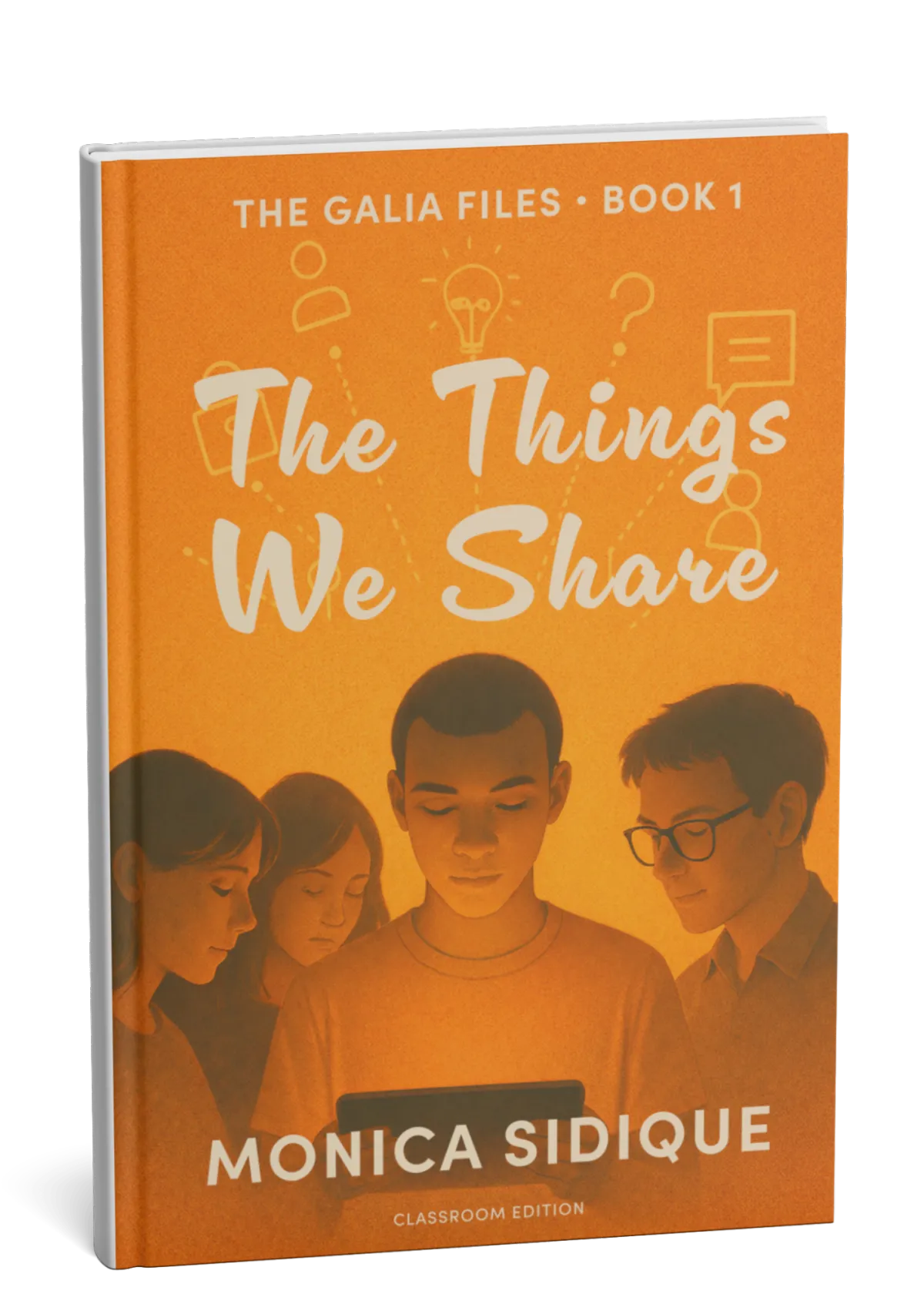
Read the opening chapters, try the first lesson and see the curriculum mapping. We'll set up your access within one working day.
Written from legal practice. Built for classrooms. Ready for RSHE 2026.
The new RSHE guidance is here. Are your lessons ready?
The updated RSHE statutory guidance applies from September 2026, with more emphasis on online safety, including how personal data is collected, shared and used, and how to think critically about information found online. The Things We Share gives you a complete, ready-to-teach unit you can start using this term.
WHY THIS MATTERS
A screenshot lands in a group chat
It looks like proof. It spreads like truth. But the context is missing, and now a single cropped image is shaping reputations, relationships, and consequences...
You’ve seen this. Probably this term.
A photo shared without asking. A private conversation screenshotted and forwarded. Personal information collected for one purpose and used for another. Your students navigate these situations every week, but most have never been taught how to think them through.
When is sharing okay and when isn’t it? Who gets to decide how your information is used? What do you do when something you shared in confidence becomes public?
And it’s not just about what they share online. When a student makes a promise, do they understand what that means? When they’re told something is “proof,” do they know how to question it? When someone says “it’s not my responsibility,” can they explain why it might be?
These are legal questions. Your students are already answering them, without the language or the thinking to get them right.
Most online safety teaching gives students rules. Don't share this. Don't post that. But the world changes faster than any rule book, and when something new comes along, like AI, the rules run out.
Principles don't.
These aren't hypothetical questions. They're Tuesday afternoon.
The Things We Share puts students inside these dilemmas through fiction, so they practise judgement, consent and fairness before the stakes are real. It's a story they'll want to finish, not another "stay safe online" lesson.
That's why the story is set in Galia, a fictional country. The point isn't one country's rules. It's the thinking underneath them, so students can reason through situations no rule book has caught up with yet. The lesson notes show teachers how each principle connected to UK law, including GDPR and the Data Protection Act 2018.
THE THINGS WE SHARE · PRIVACY AND DATA RIGHTS
A complete fiction-led unit for KS3 PSHE
A classroom edition novel with six ready-to-teach lessons. One school licence covers all KS3 classes.
Included in the full unit:
The Things We Share classroom edition, in print and audio
Six structured lesson plans (45 to 60 minutes each)
Student worksheets and scenario cards for every lesson
Curriculum mapping for England, Wales, Scotland and Northern Ireland
Glossary of legal & ethical terms (“Lexie’s Legal Lexology”)
Differentiation guidance including SEND and EAL adaptations
Listen to an extract
FREE ACCESS
See if for yourself before you commit
A classroom edition novel with six ready-to-teach lessons. One school licence covers all KS3 classes.
Step 1: Request access
Tell us about you and your school.
It takes a minute
Step 2: We set you up
We review every request personally and send your login within one working day.
Step 3: Explore for 4 weeks
Read and listen to the opening chapters, try the first lesson with your class and check the curriculum mapping.
What free access includes
Welcome to Galia, the Prologue and Chapters 1 to 4, with audio
Lesson 1 plan and printable worksheet
Lesson 1 glossary
An overview of all six lessons
Curriculum mapping for your nation
The complete book, audio and all six lessons are available with a school licence.
“It has made me think about asking people before I send photos or share things with them.”
Year 7 student, secondary school in Hampshire
TESTIMONIALS
What schools are saying
"Year 7 is just the right age group for this. We discussed what they had taken away and the key points had sunk in: consent, being clear about the purpose, changing your mind and being careful of what information they put out there. More than half the class said they'd like to read the full story.”
— PSHE Teacher, secondary school in Hampshire. Pilot with a Year 7 class of 26.
“It has made me think about asking people before I send photos or share things with them.”
Year 7 student, secondary school in Hampshire
“Following the story, we discussed real-life scenarios, like sharing screenshots, forwarding messages, gossip, and it helped learners understand what consent means in everyday situations. The open-ended questions encouraged them to share their thoughts and reflect on their own experiences.”
Teacher, SEND college in South Wales
Designed to support
PSHE leads and heads of personal development (KS3)
Citizenship and ethics coordinators
Cross-curricular champions in English and Computing
Multi-Academy Trust curriculum leads adopting across several schools
Best fit when
You teach PSHE as a real subject, not a filler slot
You want students to think, not repeat rules
You need something ready to deliver without building slides from scratch
You're updating your RSHE provision for the new guidance
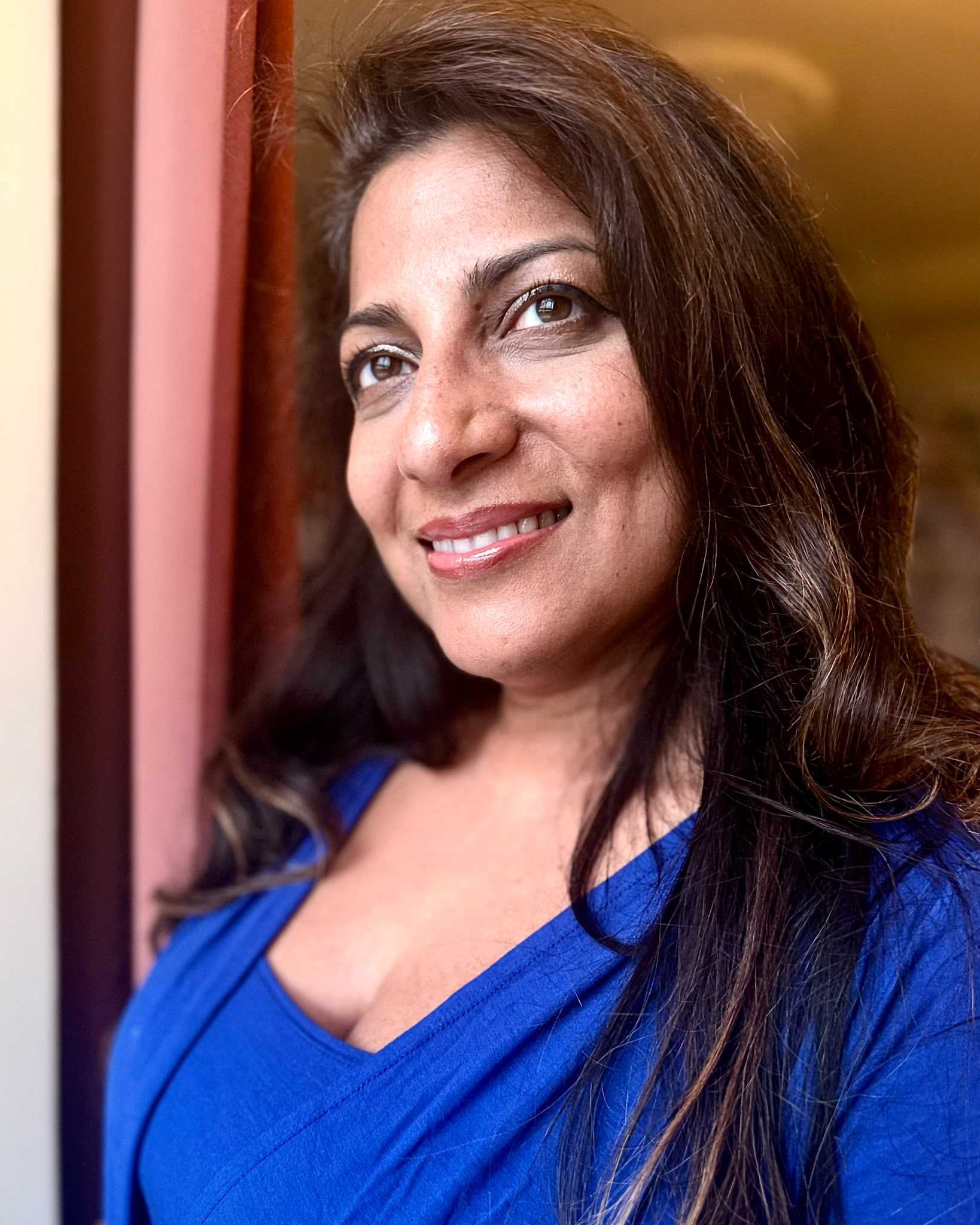
MONICA SIDIQUE
About the author
Written from legal practice. Built for classrooms.
Monica Sidique is a commercial lawyer and data protection specialist with over 20 years’ experience advising global organisations, from FTSE 100 companies to government programmes, on privacy, contracts, and digital ethics.
She founded LexFabula Ltd and created The Galia Files after seeing, through her professional work, how poorly young people understand the rights and responsibilities that shape their digital lives, and how ineffective traditional "rules and warnings" approaches can be.
She wrote the lessons herself. They were reviewed by teachers in England and Wales, including a PSHE lead and Designated Safeguarding Lead who trialled them with students at a state school in Berkshire.
The stories are set in the fictional country of Galia by design. The aim isn't to teach one country's rules, but the principles underneath them, so students can think through situations the rules haven't caught up with yet. It also makes the series relevant across the UK and beyond.
10th
Experience
THE GALIA FILES
The first unit in a growing series
The Things We Share is the first book in The Galia Files, a planned seven-book series. Next comes Book 2, The Promises We Make, exploring contracts and ownership. Future books explore truth and evidence, duty of care, human rights and justice, building to a finale that asks who controls the systems that shape young people's lives.
Be the first to hear when new units are released. No spam and no sales calls.
Frequently Asked Questions
Q: What exactly is The Galia Files Schools Programme?
The Galia Files Schools Programme is a fiction-led programme for 11 to 14 year olds, built around the novel The Things We Share. It includes a classroom edition of the novel with audio, and six structured, ready-to-teach lessons of 45 to 60 minutes, with worksheets, scenario cards and curriculum mapping. It fits PSHE and RSHE in England, Health and Wellbeing in Scotland and Wales, and Learning for Life and Work in Northern Ireland. It is licensed per school, on terms agreed with each school.
Q: How does free access work?
Request access using the form. We review every request personally and send your login within one working day. Free access lasts 4 weeks, and we'll be in touch before it ends. If a colleague at your school already has free access, you'll join the same access period, so you can explore it together.
Q: How much does it cost?
The programme is licensed per school. Contact us for pricing and multi-school rates.
Q: Is this legally accurate?
The programme is written by Monica Sidique, a commercial lawyer and data protection specialist with over 20 years’ experience advising organisations on privacy, contracts, and
digital ethics.
While the story is set in the fictional country of Galia, the principles explored reflect recognised UK and international frameworks around privacy, consent, and children’s rights.
The programme supports ethical discussion in the classroom and is not legal advice.
Q: Can students access the portal?
The portal is for teaching staff only. Students experience the story in class, through the book and audio shared by their teacher. Accounts are individual and shouldn't be shared with pupils.
Q: How long does the module take to deliver?
The full programme is structured as six lessons of 45–60 minutes each.
Schools typically use it as:
- A half-term PSHE unit
- A focused digital citizenship block
- A cross-curricular collaboration between PSHE and English
The lessons are modular and can be delivered consecutively or spaced across a term.
Q: Is this suitable for mixed-ability groups?
Yes.
The programme includes differentiation guidance, including SEND and EAL adaptations.
The narrative format often supports engagement across ability levels, as students can access the ethical dilemmas through discussion, not just written tasks.
Pilot feedback indicates positive engagement in mixed-ability settings.
Q: Can it be used with upper primary pupils?
Yes, with adaptation. The programme is designed for 11 to 14 year olds, but the Teacher's Guide includes guidance for using it with upper primary pupils (ages 9 to 11), with simpler language, shorter sessions and activities built around discussion, drama and drawing rather than written tasks. It also works well as transition preparation in Year 6 or P7.
Q: Is this just about data privacy?
No. Privacy is the starting point, but The Things We Share is really about how young people treat each other: consent, trust, fairness, responsibility, and what to do when things go wrong. Across six lessons, students move from understanding personal data to making thoughtful, ethical choices about what they share, and the judgement they build applies well beyond the screen.
It's a complete programme in its own right: the novel in print and audio, six ready-to-teach lessons, worksheets, scenario cards, templates and curriculum mapping for every UK nation. You don't need any other book to teach it.
It's also the first in The Galia Files, a planned seven-book series exploring the law and ethics of everyday life, from contracts and evidence to justice and AI. Each book comes with its own teaching module, so schools can add new units as they're released.
Q: Can I use this in English lessons as well as PSHE?
Yes. The novel works as a literary text in its own right, and several lesson plans include
tasks aligned with English curriculum objectives. Some pilot schools have used the programme as a cross-curricular collaboration between PSHE and English departments — which also means the cost can be shared across two budget lines.
Q: Is there an audiobook version?
Yes. The Things We Share is available as an audiobook as well as in print, and both are included in the school licence. Free access includes the Prologue and Chapters 1 to 4 with audio, so you can listen before you decide. Teachers use the audio to read along together in class, to support students who find longer texts harder, and to give EAL learners a model of the language.
Q: Is there a Welsh language version?
The programme is currently available in English. A Welsh-language edition is under consideration — if this would be relevant to your school, please let us know.
Ready to see it for yourself?